
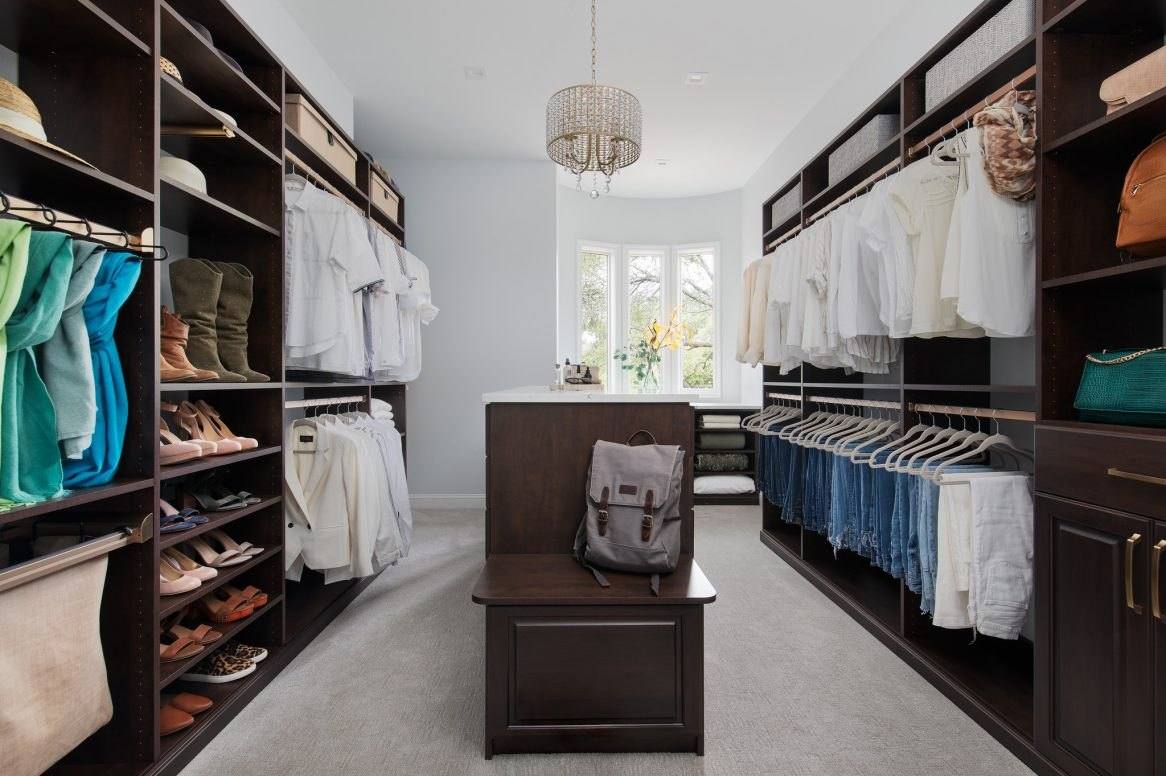
There is no single price for a custom closet. Two closets with the same floor area can differ widely in cost depending on how they are designed. That is why closet companies, including Wilmington Blinds & More, give estimates based on a specific design rather than a price list.
This guide explains what drives that estimate, so you can make informed tradeoffs and compare proposals fairly.
Why custom closets are priced from the design
A custom closet is a set of components (panels, shelves, rods, drawers, doors and accessories) cut and assembled to fit your walls. The estimate reflects how many of each component the design uses, what they are finished in, and what the installation involves. Change any of those and the price changes.
That also means you have control. Once you see a design, you can ask how the estimate shifts if you swap drawers for shelves, choose a different finish or phase in some accessories later.
1. Size and layout
The biggest factor is how much wall the system covers and how many sections it needs.
- Linear feet of wall. A walk-in with three walls of storage uses more material than a single reach-in wall.
- Height. Floor-to-ceiling systems include more shelving and panels than a system that stops partway up.
- Corners. Corner units let you use space that would otherwise be dead, but they add components.
If budget is a concern, ask the designer which walls do the most work. Sometimes concentrating storage on the most-used walls gives most of the benefit.
2. Drawers, doors and specialty pieces
Open shelving and hanging rods are the simplest components. These add more:
- Drawers. Each drawer has a box, a front and slides. A bank of drawers is often the largest single line in a closet estimate.
- Doors. Solid or glass-front doors over shelving add panels and hinges.
- Islands. A freestanding island is effectively a piece of furniture, with drawers, a top and finished sides.
- Pull-outs. Pull-out baskets, shoe racks, hampers and similar hardware each add cost.
A useful exercise: decide which items you really want hidden. Everything else can go on open shelves.
3. Finishes and hardware
Color and texture choices affect price. Smooth solid colors, wood-grain textures and specialty finishes are not all priced the same, and drawer fronts with a raised or recessed profile usually cost more than flat ones.
Hardware matters too. Handle style and finish, soft-close slides and hinges, and decorative rods all show up in the estimate. Seeing finishes and hardware in person is the best way to decide where the difference is worth it, which is one reason to visit the showroom before you finalize.
4. Accessories
Accessories are often what makes a closet feel custom:
- Jewelry drawer inserts and dividers
- Valet rods and tie or belt racks
- Integrated lighting
- Mirrors
- Hampers and ironing boards
Each one is modest on its own, but they add up. Prioritize the ones you would use daily, and ask whether others can be added later.
5. Installation conditions
Every home is different, and some conditions take extra time:
- Removing existing wire shelving, rods or built-ins
- Repairing or patching walls after removal
- Uneven walls or floors that require shimming and adjustment
- Sloped ceilings, soffits, windows or attic access panels to work around
- Baseboards that need to be removed or notched
Ask whether removal of the existing system is included in the estimate, and what preparation is expected from you.
How to compare closet quotes fairly
Quotes from different companies are only comparable when they describe similar systems. When you have more than one proposal, check:
- Scope. Do both designs cover the same walls with similar amounts of hanging, shelving and drawers?
- Materials. What are the panels and shelves made of, and how thick are they?
- Hardware. Are drawers and doors soft-close in both?
- Accessories. Are the same accessories included, or are some listed as options?
- Installation and removal. Is removal of the existing system included?
- Warranty. What is covered, for how long, and does it include installation?
- Schedule. How is installation scheduled once you approve the design?
A lower price that leaves out drawers, removal or a warranty is not a better deal. A detailed written proposal makes comparison much easier.
Getting an estimate
The quickest route to a real number is a design. Wilmington Blinds & More offers a free in-home design consultation for custom closets, where the space is measured and your needs are discussed. Prepare with How to Plan a Custom Closet Before Your Consultation, then request your consultation.